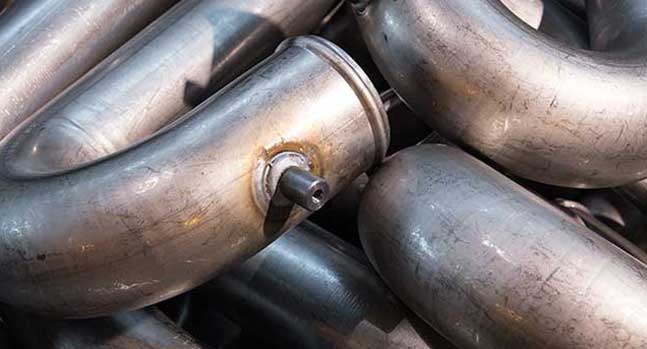
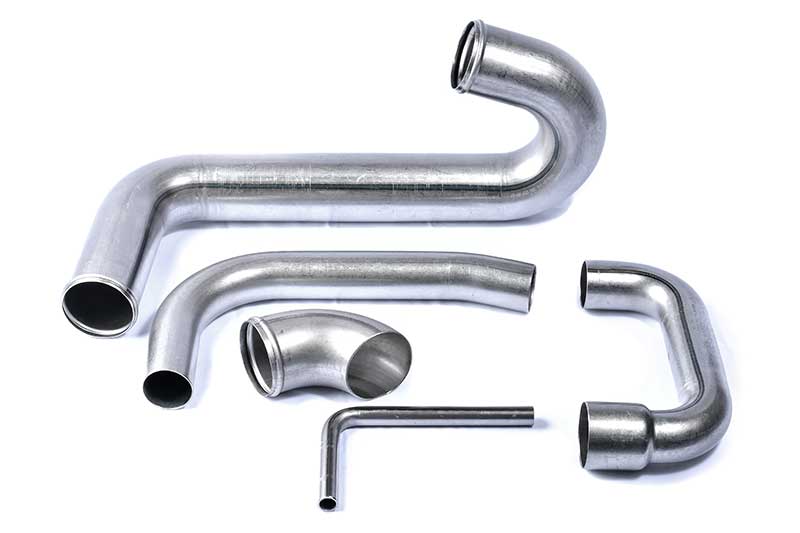
When a project requires custom stainless steel tube bending, the quality of the finished part depends on much more than simply putting tubing into a bending machine. Stainless steel grade, outside diameter, wall thickness, centerline radius, bend angle, tooling, and the intended application can all affect how the tube responds during bending.
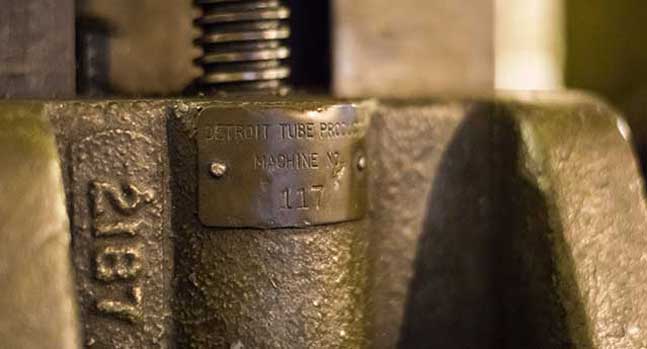
Detroit Tube Products has specialized in custom tube bending since 1911. From our facility in Detroit, Michigan, we produce stainless steel bends for customers requiring difficult geometries, tight radii, close tolerances, and specialty tubing configurations.
Our tube bending capacity ranges from 3/4-inch through 6-inch outside diameter, and our extensive inventory of existing dies gives customers access to a wide range of centerline radii. Whether your project requires a prototype, replacement component, or moderate production run, our team can help determine the right bending approach for your specifications.
Detroit Tube Products works with a wide range of stainless steel tube specifications and bending requirements, including:
For available tooling and radii, visit our tube bending die inventory.
Stainless steel is frequently selected for tubing applications because it combines strength, corrosion resistance, durability, and a clean finished appearance.
These characteristics make stainless tubing useful in applications exposed to moisture, cleaning chemicals, outdoor conditions, temperature changes, and other demanding operating environments. Stainless steel is also commonly specified where appearance or sanitation matters, including foodservice equipment, architectural products, and other exposed components.
However, the properties that make stainless steel valuable can also make it challenging to bend correctly. A successful stainless steel bend requires the proper combination of equipment, tooling, and experience.
The goal is not simply to change the direction of the tube. The bending process must control the material while minimizing unwanted flattening, wrinkling, cracking, excessive wall thinning, and dimensional variation.
Several variables should be evaluated before stainless steel tubing is bent.
The outside diameter (OD) establishes the overall tube size. Wall thickness affects how the tubing reacts as the outside of the bend stretches and the inside of the bend compresses. The centerline radius (CLR) determines how tight the bend will be in relation to the tube diameter.
Material grade also matters. Different stainless steel alloys can respond differently to forming, particularly on tight-radius or thin-wall applications.
Bend angle, part geometry, and the amount of straight tubing available between bends must also be considered. On complex components containing several bends, these factors can determine which equipment and tooling can be used to manufacture the part efficiently.
Detroit Tube Products evaluates these variables before determining the appropriate bending process.
Tight-radius bending is one of Detroit Tube Products’ core capabilities.
As the bend radius becomes tighter in relation to the diameter of the tube, controlling the tubing becomes increasingly important. Without the proper tooling and setup, the inside radius can wrinkle while the outside wall experiences excessive thinning or distortion.
Our capabilities include severe-radius bends and many 1D bends, where the centerline radius is approximately equal to the tube’s outside diameter.
Because Detroit Tube Products maintains a large inventory of bending dies, many commonly requested tube sizes and centerline radii can be produced using existing tooling. This can help reduce the need for new tooling and simplify the transition from design to production.
For unusually difficult parts, our team can evaluate tooling requirements and potential alternatives before production begins.
For many tight-radius and thin-wall stainless steel applications, mandrel bending provides additional support during the bending process.
A mandrel is positioned inside the tubing to help control the tube as it wraps around the bend die. This internal support can help maintain the cross-sectional shape of the tube while reducing wrinkling and excessive deformation.
Mandrel bending can be particularly helpful when maintaining the internal passage is important, such as exhaust, engine, fluid-handling, and other tubular components.
The correct approach depends on the tubing specification and bend geometry. Detroit Tube Products works with different tooling arrangements depending on wall thickness, radius, and material.
For a more detailed explanation of this process, visit our mandrel bending services page.
Two of the most common stainless steel grades used for industrial tubing applications are 304 stainless steel and 316 stainless steel.
304 stainless steel is widely used for general industrial applications because it combines corrosion resistance, durability, and formability. It can be found in equipment, machinery, architectural components, automotive products, and foodservice applications.
316 stainless steel provides additional corrosion resistance for more demanding environments and is commonly considered for marine, outdoor, and other applications where the tubing may encounter harsher conditions.
Choosing the right material should be based on the operating environment, design requirements, and specifications of the finished component rather than the bending process alone.
For additional material information, see our guide to the difference between 304 and 316 stainless steel.
Detroit Tube Products can work with both welded and seamless stainless steel tubing.
Each presents different considerations during bending.
With welded tubing, the quality and position of the weld seam can influence how the material behaves as it is formed. The seam, bend radius, tube wall, and application should therefore be considered when developing the bending process.
Seamless tubing eliminates the longitudinal weld seam but still requires the proper tooling and process controls to maintain dimensional accuracy throughout the bend.
Rather than assuming one tubing type or bending method is appropriate for every application, our team evaluates the specifications of the individual part.
Not every stainless steel component is made from round tubing.
Detroit Tube Products also has experience bending square and rectangular tubing for applications where structural characteristics, mounting requirements, or appearance make a non-round profile preferable.
Square and rectangular profiles present their own bending challenges because the corners and flat surfaces need to remain controlled during forming. Tooling becomes especially important when working with tighter radii or applications where visible deformation is unacceptable.
Contact our team with your tube dimensions and desired geometry so we can evaluate the available bending options.
In some applications, a properly designed bent tube can replace a component made from several straight sections joined together.
Reducing unnecessary joints can simplify a tubular component while creating a cleaner finished appearance. Depending on the design, it may also reduce the amount of downstream welding and assembly required.
This can be especially valuable for exhaust tubing, engine components, equipment piping, and applications where a continuous tube provides a more practical solution than assembling numerous cut sections and elbows.
Detroit Tube Products can review existing designs as well as new components to determine whether custom tube bending may simplify the finished part.
Stainless steel bends are used across many industries and applications.
Automotive and specialty vehicle manufacturers use bent stainless tubing for exhaust and engine-related components. Diesel engine, generator, and equipment manufacturers may require tubing that fits into confined spaces while maintaining the necessary flow path.
Foodservice and commercial equipment manufacturers often choose stainless steel because of its corrosion resistance and cleanability. Marine applications can benefit from corrosion-resistant stainless grades, while architectural and display projects may place additional importance on the appearance and consistency of the finished bend.
Other applications can include:
The correct stainless steel bending solution depends on the tube specification, operating environment, and geometry of the finished component.
Some projects require additional operations after the tube is bent.
Detroit Tube Products provides complementary tube forming and shaping capabilities including expansion, flanging, flaring, beading, end forming, and piercing or punching. We can also provide fabrication and assembly services when a project requires bosses, brackets, flanges, brazing, or weldments.
If your project extends beyond bending into a more complete manufactured component, visit our stainless steel tube fabrication page.
Keeping multiple tube processing operations under one experienced supplier can simplify sourcing for parts requiring bending, forming, fabrication, and assembly.
Tooling is one of the most important considerations in any tube bending project.
Detroit Tube Products maintains a large inventory of tube bending dies covering numerous outside diameters and centerline radii. Existing tooling can often reduce or eliminate the need to manufacture a new bend die for a project.
For customers working on prototypes, specialty equipment, replacement components, or moderate-volume production, access to existing tooling can be particularly valuable.
Our team can compare your requested OD and centerline radius against our existing tube bending die inventory and help determine an efficient way to manufacture the part.
Providing complete specifications helps our team evaluate your project more accurately.
Whenever possible, provide the following information:
A drawing, CAD file, or sample part can provide additional information when the component contains multiple bends or complex geometry.
If you are unsure whether your design can be manufactured exactly as drawn, contact Detroit Tube Products. Our experience with stainless steel, specialty materials, and severe-radius bends allows us to review difficult tubular applications and discuss potential manufacturing options.
Detroit Tube Products has been solving tube bending and forming challenges for more than a century.
Our experience is particularly valuable for projects involving specialty materials, thin-wall tubing, difficult bends, unusual geometries, and modest production quantities. Combined with our extensive tooling inventory and in-house bending expertise, that experience allows us to approach stainless steel projects based on the requirements of the finished part rather than forcing every component through the same process.
Detroit Tube Products is also an ISO 9001:2015 certified manufacturer, supporting customers that require documented quality systems and consistent production processes.
Whether you need a single difficult bend, a prototype component, or a recurring production order, Detroit Tube Products can help determine the right approach for your stainless steel tubing.
We work with stainless steel for a wide variety of industrial applications and can provide tight-radius bends, mandrel bending, close-tolerance work, and additional tube forming or fabrication when required.
Request a quote for your stainless steel tube bending project or call 313-841-0300 to discuss your specifications with Detroit Tube Products.
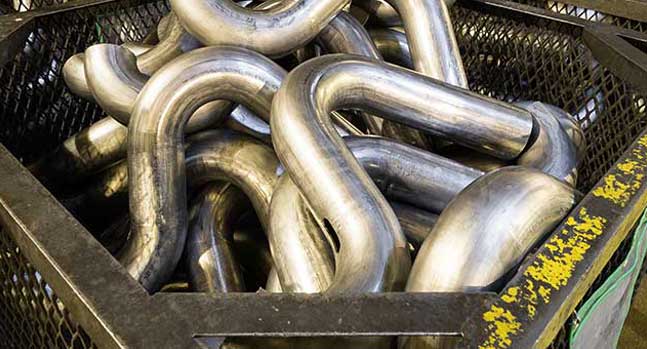
3/4" to 6" diameter bending capacity
Severe radius capability standard - all sizes
Close tolerance available
Large die selection
Bend all tubing materials and shapes.